developer_mh
Administrators
-
Joined
-
Last visited
Everything posted by developer_mh
-
Dear juhaina, this looks like a problem with the 3D model that you are using. Also be sure to use the most recent version of PV*SOL, since we published a important fix for the calculcation of the shadow frequency with PV*SOL premium 2022 R5. Kind regards, Martin
-
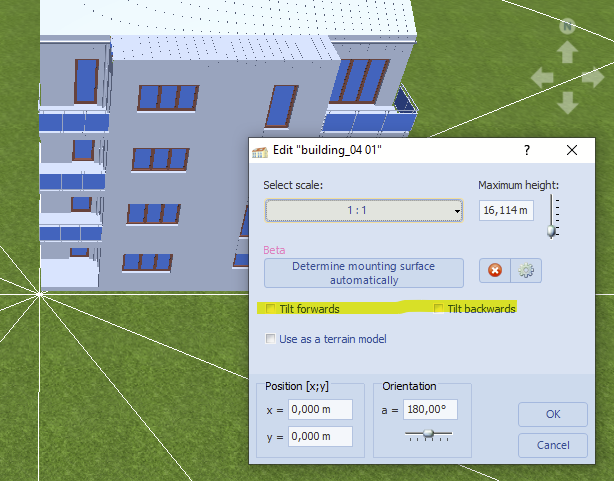
Hallo Hendrik, das Kippen geht, indem man mit Rechtsklick auf das importierte Modell geht, Bearbeiten wählt und dann die entsprechenden Häkchen setzt: Wenn man in diesem Dialog auf das Zahnrädchen klickt, kommt man auch in den Optionen-Dialog, in dem man noch die Option zur Reduktion der Punkte setzen kann. Das ist vor allen Dingen bei großen Objekten für die Performance der Schattenberechnung interessant. Ansonsten kann ich leider zu pix4d oder anderen 3D-Programmen keine ausgereiften Tipps und Tricks zur Punktreduzierung geben. Aber da finden sich bestimmt Anleitungen im Netz. Beste Grüße, Martin
-
-
Dear leojan, this kind of information is not available in PV*SOL, and it can't be. I'd guess that you as a PV system vendor/installer would have to develop a suitable PR warranty yourself. What PR can you guarantee to your customer? A warranty like that would be mostly based on the PV module performance guarantee (which the manufacturer is providing, like 90% of the original output power over 20 years or so), and some kind of service agreement with respect to the functionality of the inverters and so on. Kind regards, Martin
-
Hallo Hendrik, bei den Drohnenmodellen ist es in der Tat wichtig, dass sie nicht zu viele Punkte enthalten. In pix4d gibt es meines Wissens eine Funktion, mit der man die Punkte reduzieren kann. Oder evtl. mal Blender ausprobieren. Vielleicht gibt es in diesem Video auch noch wertvolle Hinweise: Das Drehen des Objekts kann während des Imports erfolgen, da gibt es im entsprechenden Dialog Möglichkeiten, das Modell nach vorne oder hinten zu kippen. Beste Grüße, Martin
-
-
-
Hi Jimmy, thanks for the feature request, sounds good! We will put it on the list. Kind regards, Martin
-
Hi James, yes, this is fixed in the upcoming release PV*SOL premium 2022 R5. We are very sorry for the unconvenience caused. Kind regards, Martin
-
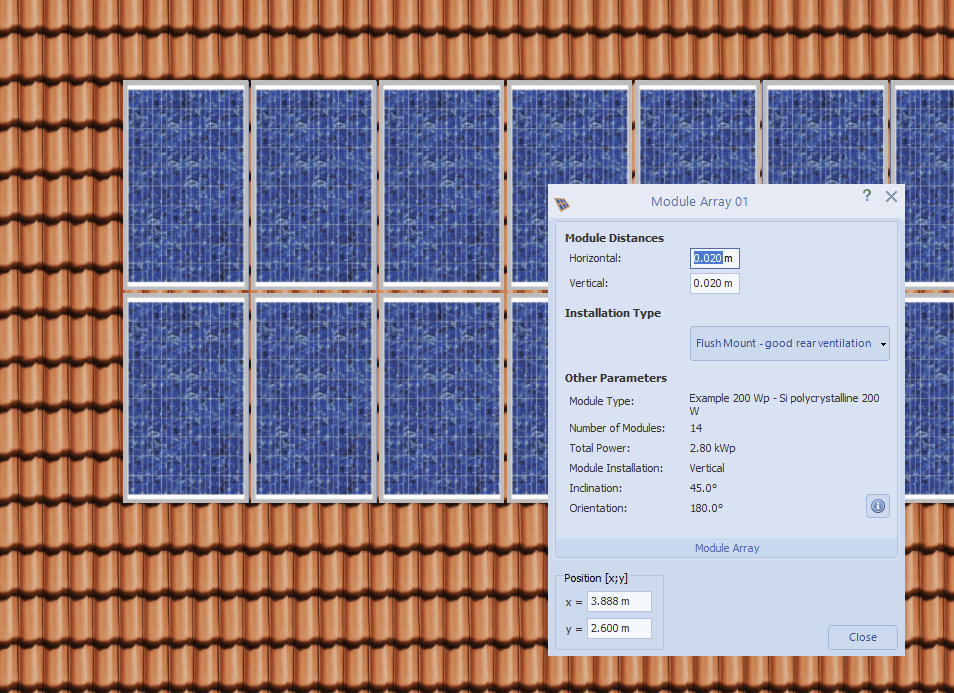
Hi Ludd, there is no automatic function to do this, I am afraid. You can enter the exact position, though. With a little math (x = (length of roof - length of module array)/2) you can determine the x value needed to center the modules. Hope that helps, kind regards, Martin
-
Hallo Marco, man kann derzeit in PV*SOL nur PV mit Batteriesystemen oder PV mit einem thermischen System simulieren. Eine Möglichkeit ist aber, den elektrischen Verbrauch der Wärmepumpe als "normalen" elektrischen Verbraucher in einem System mit PV und Batterie zu hinterlegen. Dann kann man alle drei Elemente miteinander simulieren. Allerdings ist das Energiemanagement dann natürlich nicht besonders intelligent. Der elektrische Verbrauch wird ja immer vorrangig bedient. Genau das Energiemanagement, das die Energieflüsse zwischen Batteriesystem, Wärmepumpe und gegebenenfalls Elektro-Auto leitet, ist bisher nicht implementiert. Daher können wir diese Option bisher nicht in PV*SOL anbieten. Nein, GeoT*SOL ist ein reines Wärmepumpen-Programm. Man kann hiermit aber sehr schön realistische elektrische Wärmepumpenprofile erzeugen, die man dann in PV*SOL importieren kann. GeoT*SOL kann aber keine PV und keine Batteriesysteme. Hoffe, das hilft weiter. Beste Grüße, Martin
-
-
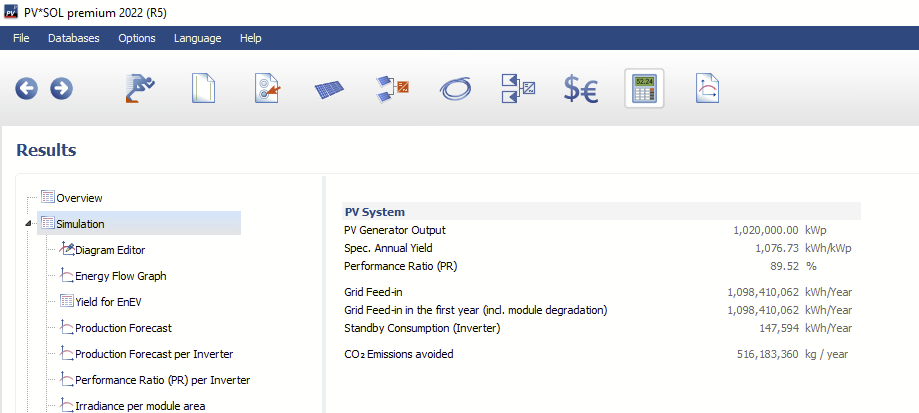
Dear Davidvc, the only restriction we have in PV*SOL is the number of modules and mounting systems used in the 3D environment. If you plan without 3D, the PV plant size is unlimited. If you plan in 3D, we restrict the maximum module number to 10000 (or 7500 for mounting systems). If you multiply that by the current nominal power of a typical module, say 350 Wp, you get 3.5 MWp as a limit. The threshold is editable in the settings file, though. It really depends on your computer.. Without 3D planning, you can easily simulate more than 500 MWp. Kind regards, Martin
-
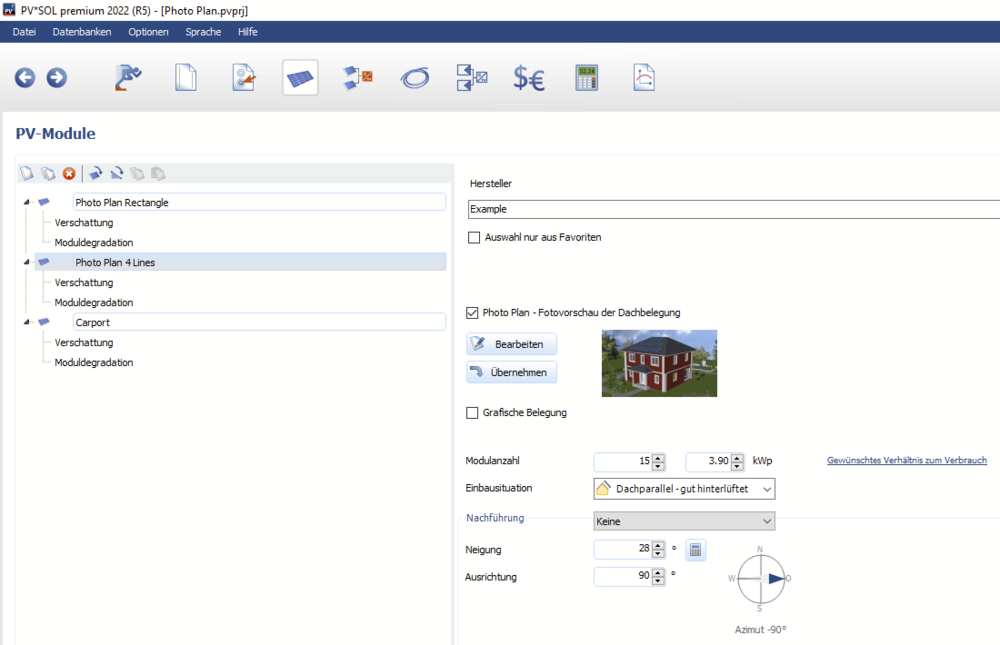
Hallo Mats, das geht, indem man pro Dachfläche eine Modulfläche anlegt. In der Beispiel-Datei "photoplan" ist das so gemacht: Beste Grüße, Martin
-
Hi LuaiD, thank you for the project. The solar fraction in net metering projects is the PV generator energy (AC) divided by the consumption, so in this case 865154 kWh ÷ 1532128 kWh = 56.5 % The level of self sufficiency is the fraction of the consumption that has not to be covered by the grid, so 1 - ( 983668 kWh ÷ 1532317 kWh ) = 35.8 %. The difference between "Energy from Grid" in the consumption section and "covered by grid" in the section "Level of self-sufficiency" is the grid feed-in. "Covered by grid" is everything that comes from the grid, "Energy from grid" is "covered by grid" minus the grid feed in. Hope that helps, kind regards, Martin
-
Hi xueting, I understand that it is not possible for you to send the file. It will be difficult to identify the problems then, I guess. Yes, this is absolutely reasonable. This is good. Additionally, can you check if the peak of the daily sun height curve is in sync with the peak of the daily irradiation curve? No, the position of the sun is calculated in the software, for each time step. Some more question/issues to look at: Can you post screenshots of the PV module database entry? Do you have the measured data on the DC side of the inverter? Did you measure and import one complete year of irradiance data? From 01. January to 31. December? Kind regards, Martin
-
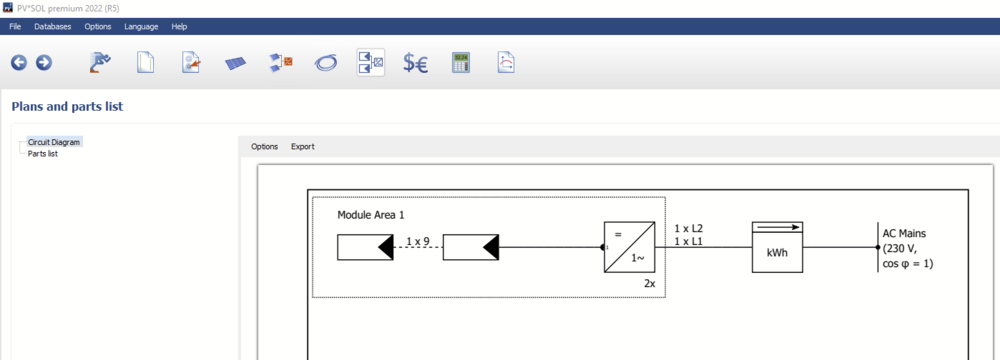
Hi Codrin, I am sorry, I'm not sure if I understand your question correctly. If you have a PV system with modules and inverters, you can just click on the page "Plans and parts list" and see the circuit diagram: If you want to edit the cabling, you can do so on the page "Cables". Kind regards, Martin
-
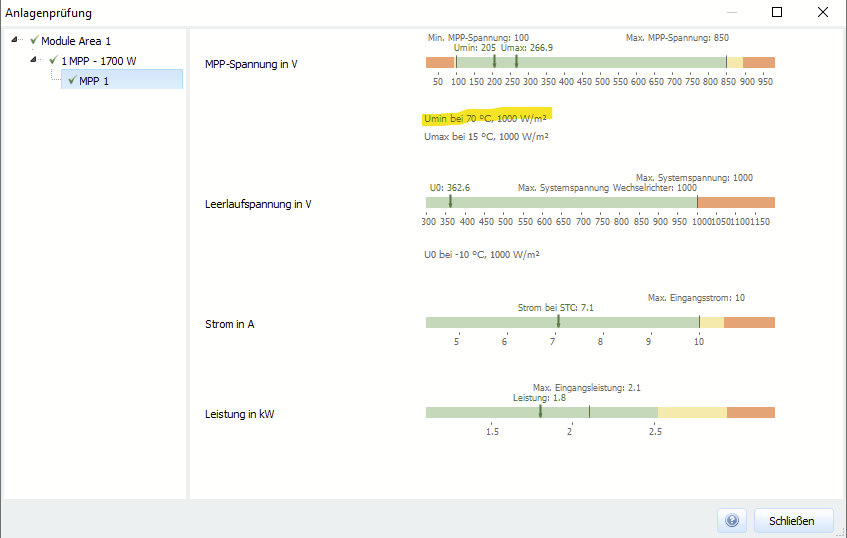
Hallo N_G, bei der Anlagenprüfung wird überprüft, ob die möglicherweise auftretenden Spannungen und Ströme der PV-Module über den ganzen Betriebsbereich noch vom Wechselrichter verarbeitet werden können. Die Überprüfung der minimalen MPP-Spannung findet bei dem Betriebspunkt 70°C und 1000 W/m² statt. Daher stehen da in der Warnung bei dir nur 28,7 V und nicht 34,9 V. Die Überprüfung nach der maximalen MPP-Spannung findet bei 15°C und 1000 W/m² statt. Die Überprüfung der Leerlaufspannung hingegen bei -10°C und 1000 W/m². Diese Werte entsprechen dem Stand der Technik, den best practices der Auslegung sozusagen. Sie sind aber auch in den Optionen einstellbar, wenn einem was anderes vorschwebt. Beste Grüße, Martin
-
Hallo N_G, hast du für die zehn Jahre je eine Datei? Wenn ja, musst du sicherstellen, dass sich die Bezeichner in der ersten Header-Zeile unterscheiden. Sonst denkt PV*SOL, dass die Datei schon vorhanden ist. Beste Grüße, Martin
-
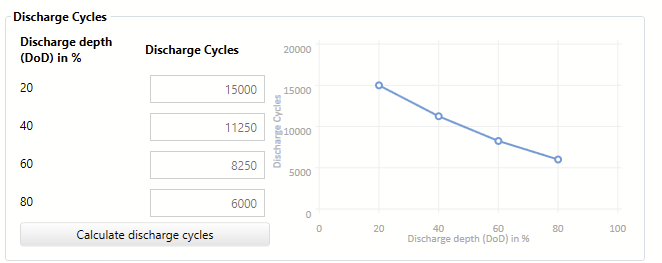
Hi David, PV*SOL takes the cycles from the database entry of the respective battery system, more precisely from the battery that is used in the battery system: The deeper the depth of discharge, the smaller the cycle number that the battery system can run. In the simulation, the current DoD of the battery is taken in order to determine the cycle load for the current time step. Hope that helps, kind regards, Martin
-
Dear xueting, this looks good so far. So as a next step I would recommend to look at the irradiance values before and after the simulation. Best option here would be the diagram editor where you can select the time series you want to analyze. You can select the "Irradiance onto horizontal plane" and the "Irradiance onto tilted plane" and see how it looks like. You can right click and copy the values to the clipboard, and compare them to the values that you imported. Just to be sure, also have a look at the elevation of the sun. Its curve must be in sync with the irradiance values, that is, sunrise and sunset must not be shifted. Next check would be the PV module data that you entered. Especially the low light behaviour might be a reason for an unusually good performance. If you wish, you can also send your irradiance data as well as the project file so that I can have a quick look. you can send the files here in the forum via private message. Kind regards, Martin
-
Hallo Ralf, ja, ich verstehe das Problem. Im Datenblatt steht bei der Anmerkung zur nutzbaren Kapazität Folgendes: Da wurde scheinbar der Begriff nutzbare Kapazität für Marketingzwecke etwas gedehnt. 100% DoD (depth of discharge) ist eben genau nicht die nutzbare Kapazität, sondern die Nennkapazität. Eingegeben werden die Systeme ja in der Regel vom Hersteller. Ich leite das mal an unser Datenbank-Team weiter, dass die nochmal bei GoodWe nachhorchen. In der Zwischenzeit kannst du das entsprechende Batterie-System aber auch einfach kopieren und für den minimalen SOC eure 7% eingeben. Den Wunsch nach widerspruchsfreien Daten hegen wir in der Tat auch, ziemlich intensiv sogar. Gerade in Bezug auf leider oft eher marketingorientierte Datenblätter bleibt dieser Wunsch jedoch des Öfteren unbefriedigt. Beste Grüße, Martin
-
Hallo BobWolf, beim Ex- und beim Import der Daten ist da scheinbar ein Fehler mit dem Dezimal-Trennzeichen aufgetreten. Am besten vor dem Import in PV*SOL mal die exportierte Datei mit einem Texteditor öffnen und schauen, welches Dezimaltrennzeichen dort verwendet wird (das ist abhängig von den Systemeinstellungen). Dieses Dezimaltrennzeichen ist dann beim Import der Daten in PV*SOL anzugeben. Beste Grüße, Martin
-
Hallo aqualx, ein separater Strombezugstarif ist nur möglich bei der Verwendung des thermischen Systems. Beste Grüße, Martin
-
Hallo Ralf, bei den Batterie-Systemen muss man unterscheiden zwischen der Nennkapazität und der nutzbaren Kapazität. In diesem Fall hat z.B. das System mit der BYD HVS 10.2 eine Nennkapazität von 25 Ah auf 409,6 V = 10,2 kWh. Der minimale Ladezustand liegt bei 20% (etwas hoch, aber durchaus realistisch), der maximale bei 100% (meiner Meinung nach eher zu hoch, da Batterien nur sehr selten bei diesen hohen Füllständen betrieben werden sollten). Daher sind nur 80% der Nennkapazität auch wirklich nutzbar. 80% von 10,2 kWh macht 8,2 kWh. Kein Grund zur Sorge also. Beste Grüße, Martin