
developer_mh
-
Posts
1,855 -
Joined
-
Last visited
-
Days Won
173
Everything posted by developer_mh
-
Hallo AoS, doch, eigentlich geht das schon. Könntest du mir das Projekt zukommen lassen, dann kann ich mal schauen. Gerne hier im Forum als private Nachricht. Beste Grüße, Martin
-

Belegung gemeinsamer Fassadenfläche und Problem mit Verschiebung der Tiefe
developer_mh replied to Lukas615's topic in PV*SOL
Hallo Lukas, am besten arbeitest du in diesen Fällen nicht mit Stockwerken, sondern extrudierten Objekten. Diese kann man beliebig aufeinander setzen, und auch mit Attikas versehen: Die äußere Attika-Fläche kann jedoch leider nicht mit belegt werden. Beste Grüße, Martin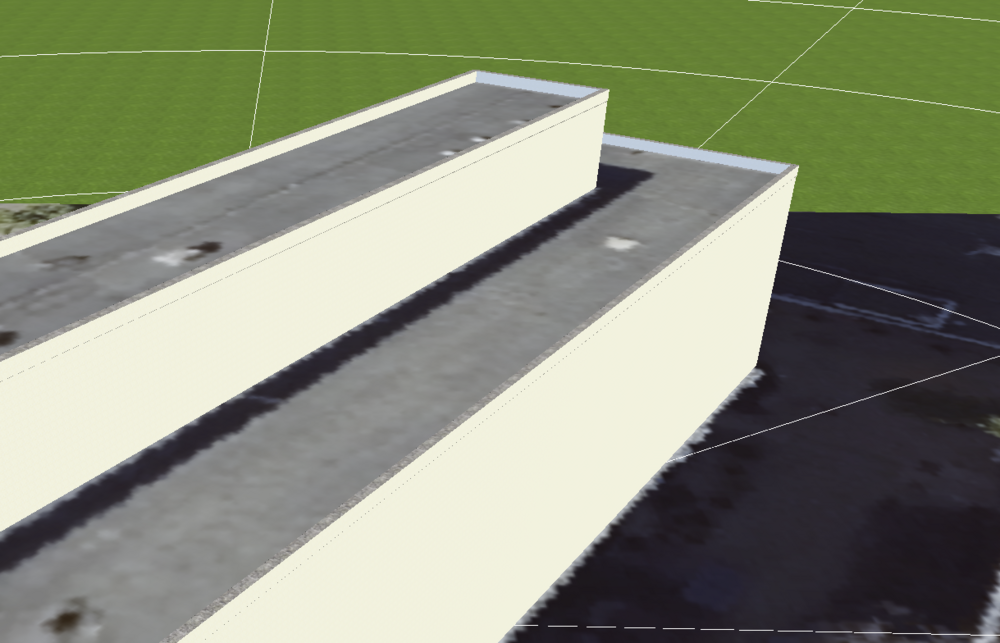
-
Modeling cable losses on AC side for multiple inverters
developer_mh replied to Rob's topic in PV*SOL
Hi Rob, this is not possible right now in PV*SOL, but we already have this feature request on our list. What I would recommend right now is to model the cable for each inverter as if it was part of the long distance cable. As an approximation this is possble if your inverters roughly have the same power. As the loss power is calculated with P = I_big² · R_big, and R_big = ρ · l / A_big. So through your big cable with cross section A_big you have the current I_big, which is the sum of the currents of your individual inverters. If we suppose that all inverter currents are the same at any time (which they aren't, but we have to assume it as an approximation), we can say that I_big = n · I_inv, with n being the number of inverters. So the cross section of each individual inverter cable would have to be divided by n in order to obtain approximately the same result. Example: You have one big cable of 300m length with 300mm² cable with 4 inverters connected to it. This is roughly the same, in terms of power loss, as 4 individual cables with 75 mm² (300 / 4). If each inverter would have an output current of 10A, the power loss in the big cable would be (4 · 10 A)² · R_big = 1600 A² · 0.028 Ωmm²/m · 300 m / 300 mm² = 44.8 W If each inverter has its own cable, then it is (10A)² · 0.028 Ωmm²/m · 300 m / 75 mm² = 11.2 W, but you have that four times, so its 4 · 11.2 W = 44.8 W Hope that helps, kind regards, Martin -
Hi TurtlesOG, try to deselect "Corrigir distorção" in the extrude dialog and see if the texture is correct now. Kind regards, Martin
-
Guten Morgen Tom_ebr, das geht relativ einfach und ist hier beschrieben, Abschnitt "Lastprofile importieren" https://help.valentin-software.com/pvsol/2022/de/navigationsseiten/verbrauch/#gemessene-verbraucher Viele Grüße, Martin
-
Hi Tiago Motta, we are currently investigating this issue. The attica shading problem and the problem with obj models are possibly unrelated, though. It would be very helpful if you could provide the original obj files, along with the information which photogrammetry software you used to create it. Also the PV*SOL project that you took the screenshots of would be very helpful. Could you please send these files to our technical support team at hotline@valentin-software.com? Just add a short hint in your email that they should forward it to me. Thanks a lot and kind regards, Martin
-
Combine multiple PV arrays / Edit PV grid layout
developer_mh replied to TurtlesOG's topic in PV*SOL
Hi TurtlesOG, hi Jimmy, it is possible to combine module areas of the same orientation and inclination already in the "Define Module Areas" dialog: Hope that helps, kind regards, Martin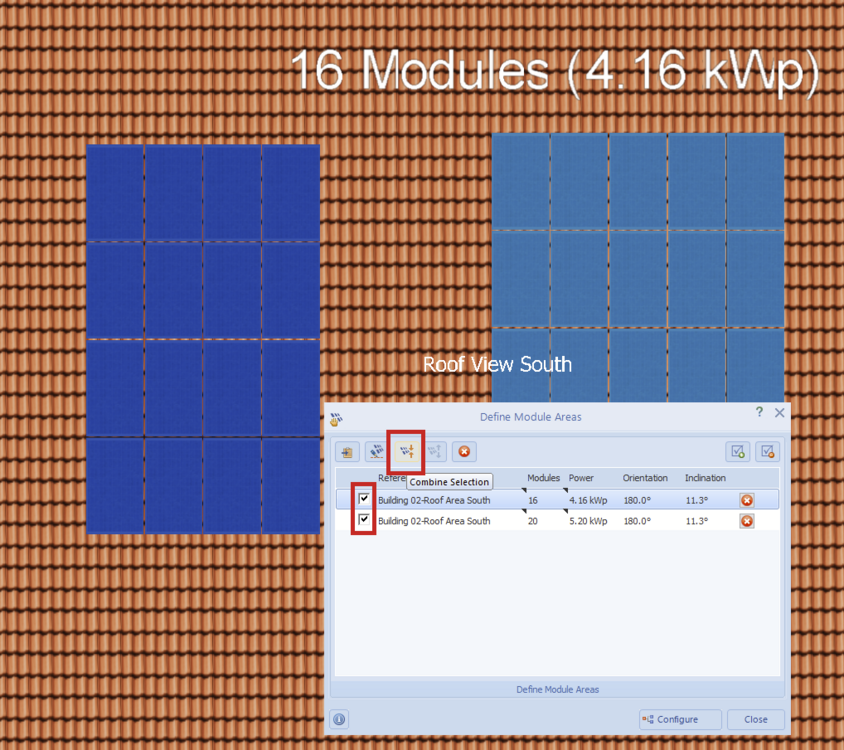
-
Hi GdE, here is a translation of you question, made with deepl.com: You can use the net metering option in PV*SOL. On the economy page, switch to net metering. There you can enter the tariff zones and prices. Then, in the consumption page, you can enter the monthly consumption values. See also this forum thread for example: Hope that helps, kind regards, Martin
-
Hi Silvester, coudl you provide more details about the error? Can you make a screenshot? Also, the logfiles would be interesting. You can find them here: C:\ProgramData\Valentin EnergieSoftware\log C:\ProgramData\Valentin EnergieSoftware\log You can send them to me with a private message here in the forum. Thanks and kind regards, Martin
-
Dear Flavio, does this happen every time that you try to select a PV module in 3D? Could you click on "send bug report", please and let us know the time and date? That'd be helpful, thanks. Also, could you provide your log files, please? You can find them here: C:\ProgramData\Valentin EnergieSoftware\log The files with PVSOLpremium in their name would be helpful. You can send them to me here in the forum as private message. Kind regards, Martin
-
Hi Marius, the optimizers are only shown in the circuit diagram, I am afraid. Kind regards, Martin
-
Hallo N_G, die Rückseitenstrahlung wird tatsächlich simuliert, mit dem View-Factor-Modell. Mehr dazu hier: https://help.valentin-software.com/pvsol/2022/de/berechnungsgrundlagen/pv-module/bifaziale-module/ Beste Grüße, Martin
-
Hallo N_G, nein, das geht auch in der Test-Version. https://help.valentin-software.com/pvsol/2022/de/navigationsseiten/anlagenart-klima-und-netz/meteosyn/#optionen Beste Grüße, Martin
-
Interesting! Thanks, Jimmy
-
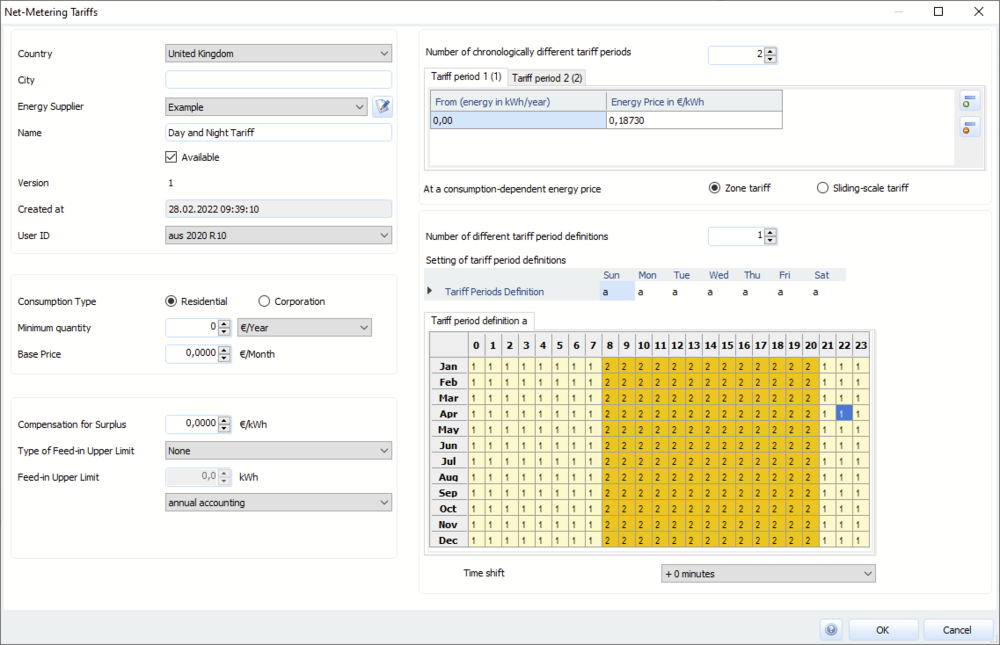
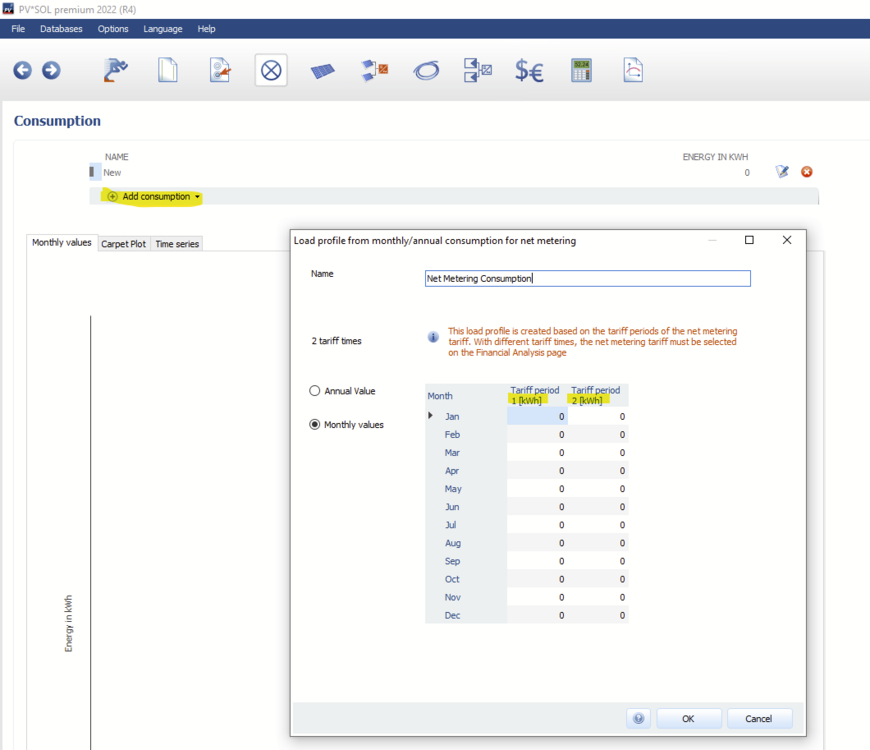
Hi Carl, first you would have to enter a net metering tariff with two periods. You can set the numbers 1 and 2 in the table of the tariff period definition as you require. Then, if you choose " add consumption" on the consumption page, and you choose "Monthly / annual consumption for net metering", you'll get this dialog where you can enter the day and night time consumption values from your customers: Hope that helps, kind regards, Martin
-
Module verschoben oder (automatisch) falsch belegt
developer_mh replied to Gerardo's topic in PV*SOL
Hallo Gerardo, Dachfenster sollten bei der Belegung auf jeden Fall ausgespart werden. Könntest du dich mit Projekt und Kundennummer an unsere Hotline wenden? Dann können die sich das mal anschauen. https://valentin-software.com/support/technischer-support/ Danke und viele Grüße, Martin -
Super! Schön, dass es sich geklärt hat. Beste Grüße, Martin
-
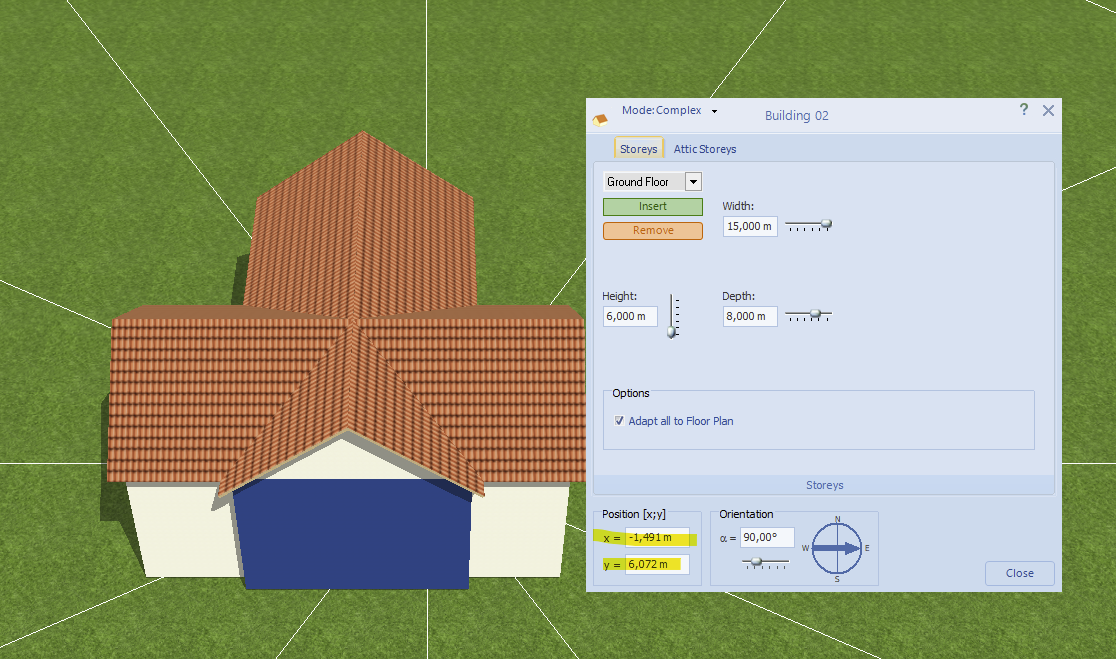
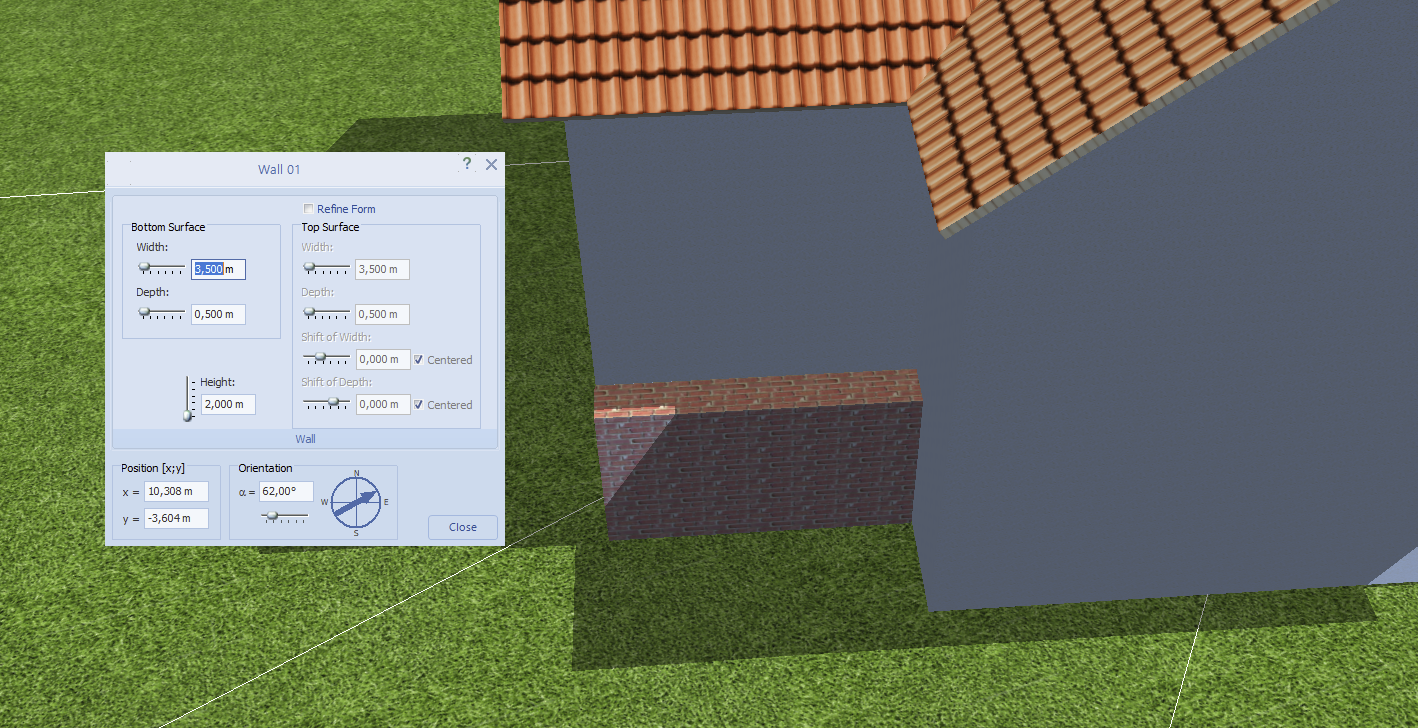
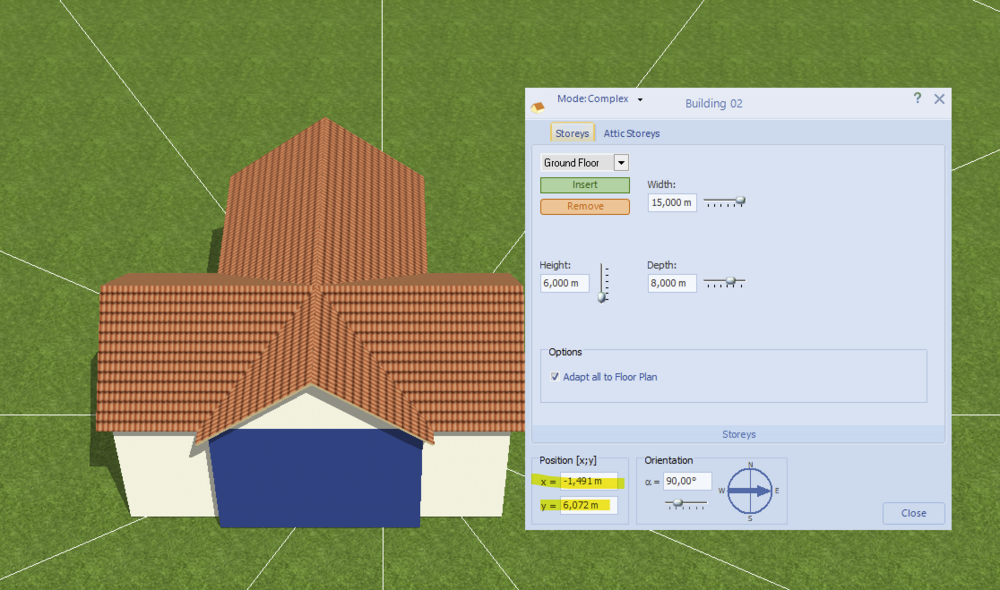
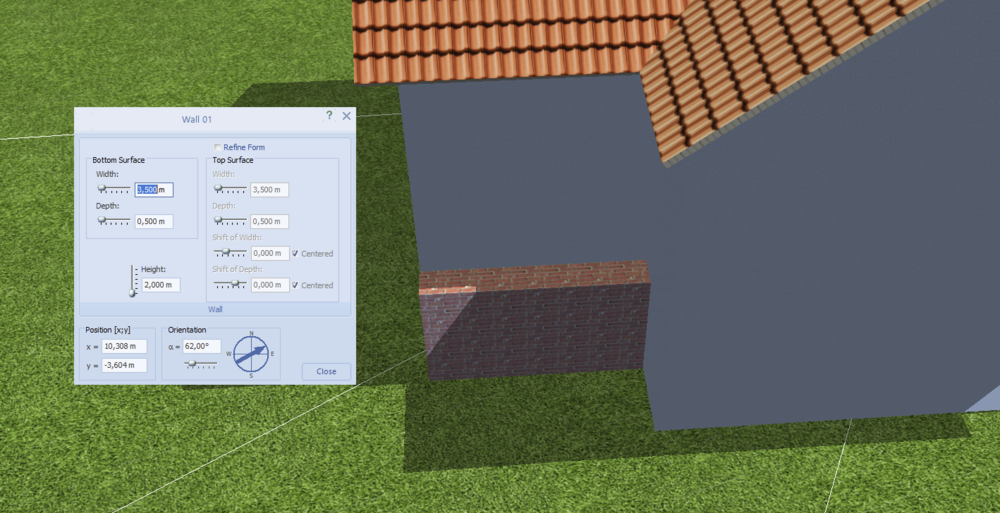
Hi Sondre207, I am sorry, I don't really understand what you mean. Do you mean "green line" instead of "blue line"? If you need to place buildings precisely, you can use the position fields in the edit dialog: If the buildings are rotated, the math becomes a bit more complex. So I'd recommend to create a small wall with the desired distance from the edge, and then place the other house accordingly: Here, my wall segment is 3.5m wide, because my main building is 15m wide and the rotated building is 8m wide. Once you have placed the second building correctly, you can remove the wall segment. Kind regards, Martin
-
Hi Sondre207, no, this is not possible, at least from within PV*SOL. However, you can export the circuit diagram as SVG file, open it in inkscape (or any other vector editing software), and add the text yourself: Hope that helps, kind regards, Martin

-
PV*SOL Google map data is older than the Google map data in browser
developer_mh replied to Jimmy's topic in PV*SOL
Hi Jimmy, thanks for reporting this, and thanks for the coordinates as private message. We will be able to fix this in the new version PV*SOL premium 2022 R5. Kind regards, Martin -
Hi Sondre207, you can achieve this with a second building, take a look here (it is in German, but from the screenshots you'll get the point): With just a dormer it is not possible to do it, I am afraid. Kind regards, Martin
-
Zwei unterschiedliche Angaben für den spez. Jahresertrag in einer Simulation?
developer_mh replied to Goofy's topic in PV*SOL
Hallo Goofy, Ja, genau. Die 10 kWh Differenz kommen aus der Ladung der Batterie am Anfang. Sie kommt ja nicht leer ins System, sondern bringt schon Energie mit. In der Energieflussgrafik wird das auch nochmal verdeutlicht: Summe der Energien, die in die Batterie reingehen: 2224 + 10 = 2234 kWh Summe der Energien, die rausgehen: 2030 + 152 + 52 = 2234 kWh Hoffe, das hilft weiter. Beste Grüße, Martin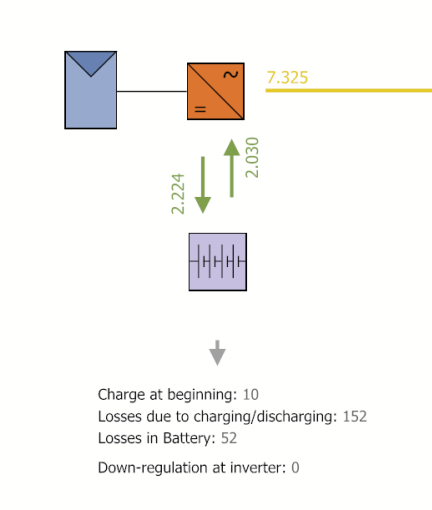
-
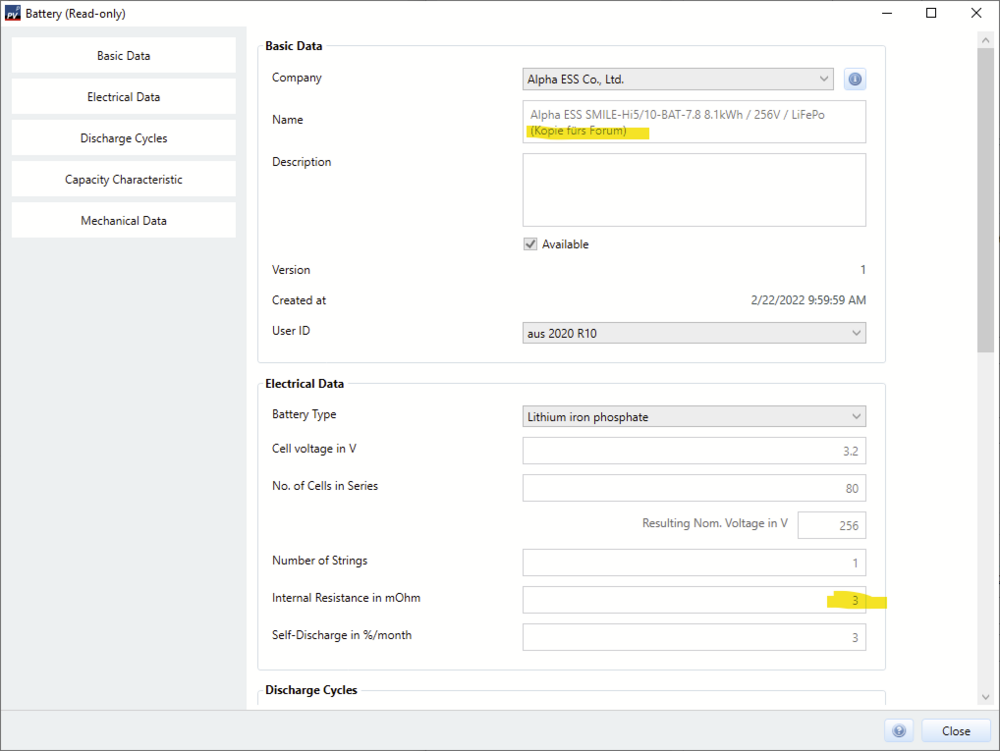
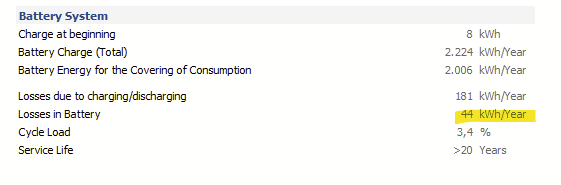
Hallo Christopher, vielen Dank für das Projekt. Der Batteriespeicher wird in dieser Anlage ordentlich gefordert, die Lade- und Entladeleistungen nutzen täglich fast den vollen Leistungsbereich aus - der Speicher ist also sehr gut dimensioniert und leistet seinen nicht unerheblichen Beitrag. Durch die intensive Nutzung des Speichers auch mit hohen Leistungen steigt dann auch der Verlust in den Batterien. Die hier verwendete Batterie hat einen Innenwiderstand von 65 mΩ. Nur mal eine überschlägige Rechnung: Wenn man mit 7kW lädt, beträgt der Ladestrom etwa 7000 W / 256 V = 27 A. Allein die ohmschen Verluste in der Batterie liegen dann bei um die 50 W. Natürlich wird nicht immer mit 7 kW geladen, aber man kann schon mit Verlustleistungen zwischen 10 und 50 W rechnen. Gegenrechnung: Wenn man die "Verluste in der Batterie" von 204 kWh im Jahr herunterrechnet auf die Stunde kommt man bei 23 W durchschnittlicher Verlustleistung raus, was ja sehr gut hinkommt. Als letzten Test kann man auch mal eine Kopie des Batteriesystems anlegen, die eine Kopie der aktuellen Batterie enthält, bei der man den Innenwiderstand auf z.B. 3 mΩ setzt. Und siehe da: Die Verluste in der Batterie nehmen deutlich ab: Hoffe, das hilft weiter. Viele Grüße, Martin
-
Hi Kim, please contact our sales team at sales@valentin-software.com, along with your customer number and serial number. They will be able to help you out. Kind regards, Martin
-
Hi James, no, the Jinko JKM410M-72H module is not in the update. I will forward your request to the database team. Kind regards, Martin