developer_mh
Administrators
-
Joined
-
Last visited
Everything posted by developer_mh
-
Dear Johan, would it be possible for you to send the project file so that I can have a look into it? You can send it here in the forum as a private message to me. Thanks and kind regards, Martin
-
Hi Solar Designer, climate data can be derived from various sources, using various methods. In PV*SOL we offer our users to use climate data by the following providers: Meteonorm Valentin Software (our own method, for Germany only) PVGIS Solcast SolarAnywhere These providers all use different approaches and different data sources. Most of the time, a mixture of satellite imagery and ground measurement is used as input data. Please also have a look at our help pages, there you'll also find links to the providers: https://help.valentin-software.com/pvsol/en/pages/system-type-climate-and-grid/meteosyn/#create-new-location Kind regards, Martin
-
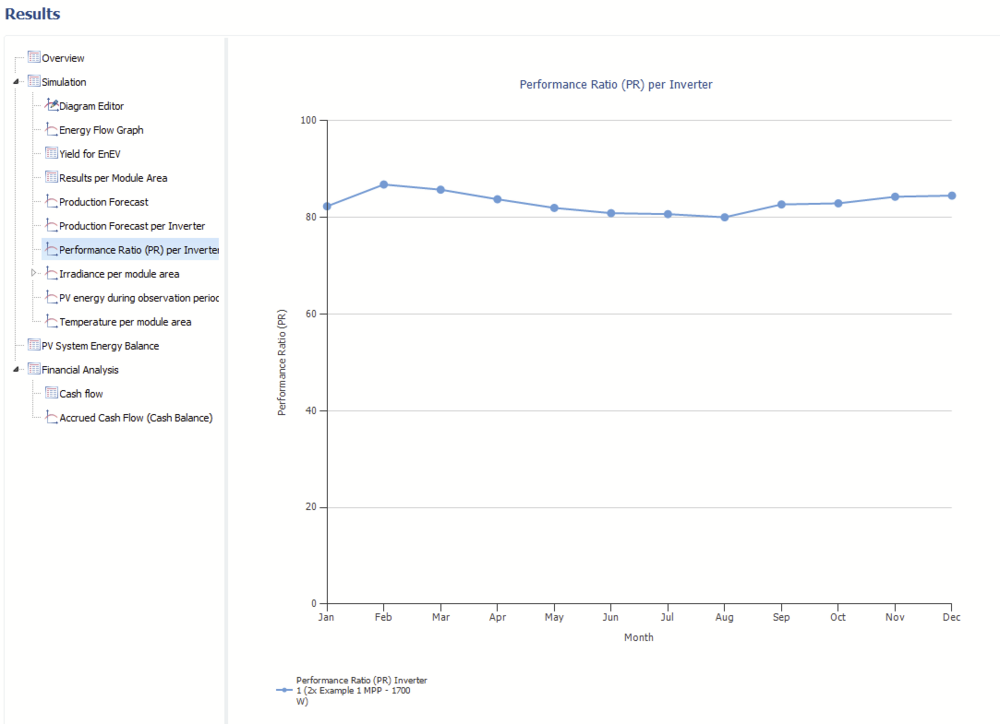
Hi Marta, the monthly PR values can be found on the page "Results", under "Simulation" and then "Performance Ratio": You can also copy the values of the diagram by right clicking on it. Kind regards, Martin
-
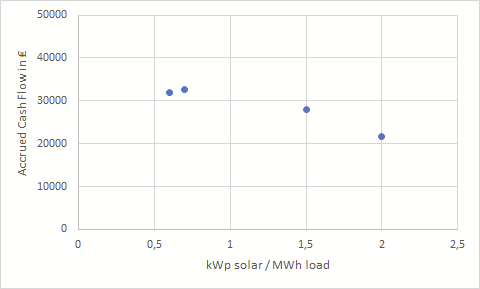
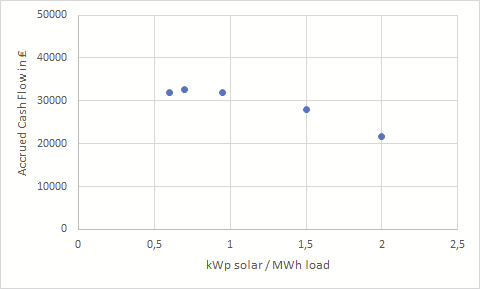
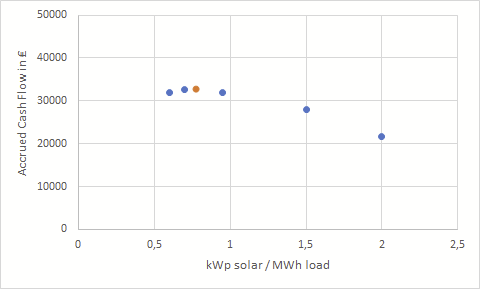
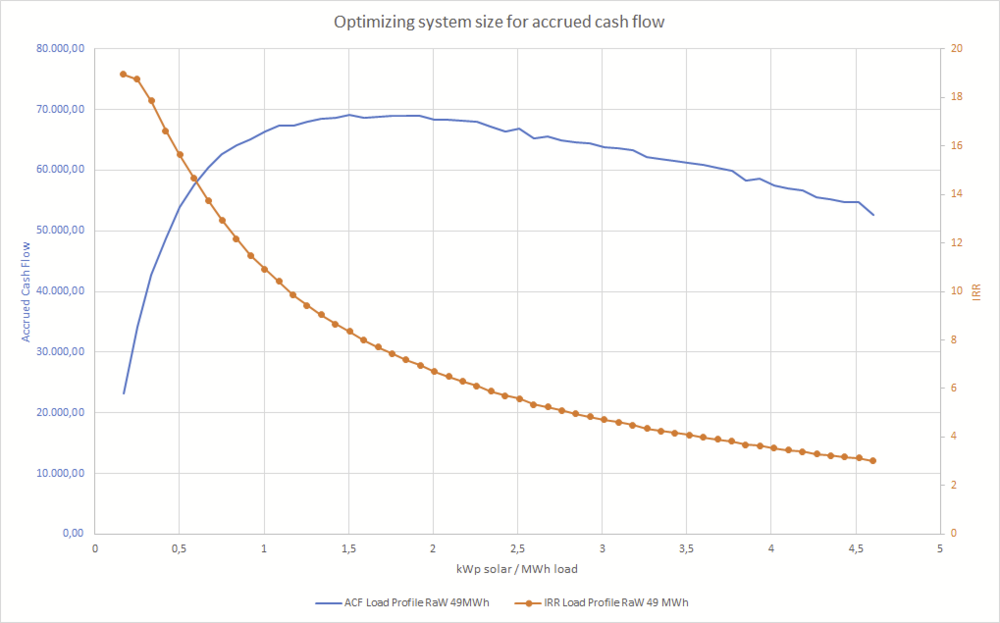
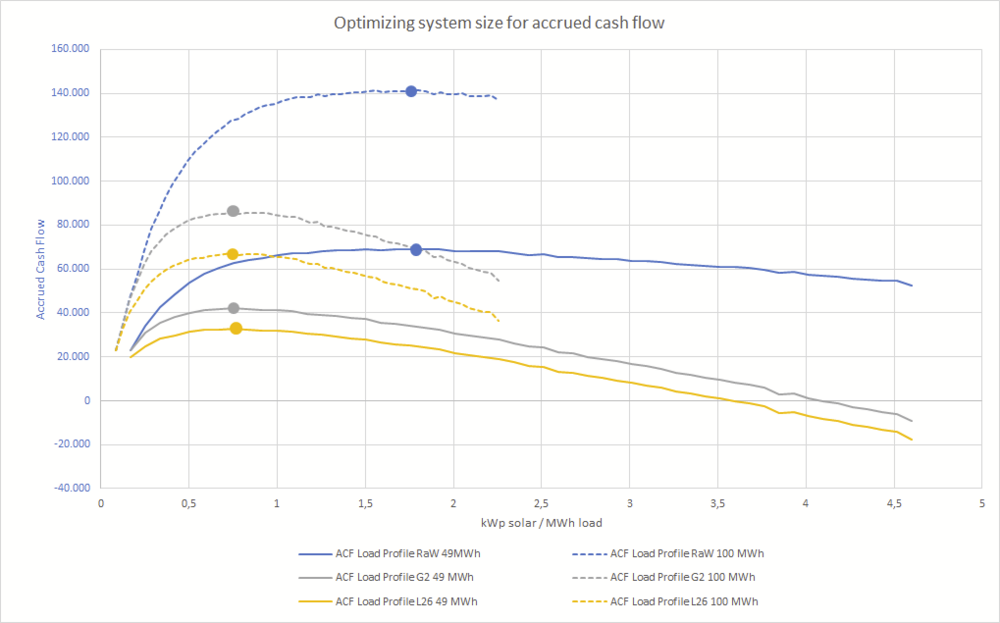
Hi RaW, Yes, but it will not favour PV installations of unlimited size. As you can see in the blue curve, there is an optimum - that is what we will want to aim for. No, this is not yet available in the official PV*SOL version that our customers can buy. I have generated these figures and graphs directly from our code. Our goal would be to fully understand the optimisation process and then come up with a solution that is helpful to our customers and doesn't require a complete rewrite of our software. The 49 MWh came from the load profile you provided (48884 kWh to be precise). The 100 MWh was just an arbitrary choice to roughly double the consumption. In my simulations, I can go from 10 to 500 panels, simulate each system and write down the results. The aim would be for our customers to be able to do this automatically in the future. At the moment, as this feature is not yet available in PV*SOL, the user would have to iterate manually to find the perfect system size. My point was that once you know that there is an optimum point somewhere between 0.6 and 2 kWp/MWh, you can speed up the process dramatically. Let's look at this in more detail, let's say we have a consumption of 49 MWh, load profile G2 (which corresponds to the yellow line in the diagram above): You start with 0.6 kWp / MWh = 29.4 kWp (approx 72 PV modules of 410 Wp each) You simulate and get an Accrued Cash Flow of around 32 000 ₤ Then you go with 0.7 kWp / MWh = 34.3 kWp (approx 84 PV modules) You simulate and get 32 600 ₤ Now you already know that the optimum will be at a point larger than 0.7 You repeat the same for the two points 2 kWp / MWh and 1.5 kWp / MWh which will give you 21 700 ₤ and 28 000 ₤ respectively This will give you these for points: You can now calculate (or estimate) the point where the two lines through the pairs of points will intersect. In this case it is 0.95 kWp/MWh: Now you calculate the cash flow for 0.95 kWp/MWh, and you get approx. 31 900 ₤ and the diagram looks like this: Now you know your optimum is between 0.7 and 0.95 kWp / MWh. Determine the next point, 0.77 in this case is where the two lines intersect: Simulating with 0.77 kWp / MWh (i.e. 37.7 kWp or 92 PV modules), the Accrued Cash Flow is around 32 800 ₤, which is already a good optimum: Of course, this still involves some manual work, but you don't have to iterate through all the possible system sizes. In this case, six simulations are sufficient. When you write up the Accrued Cash Flow results for your client and then show them the diagram, you will have a really convincing way of explaining why you chose this size of system and not a larger or smaller one. We will also discuss how and when we can implement a first simple version of the optimisation in PV*SOL. But as we already have a lot of topics on our list, I can't give you a date at the moment. I hope this helps, best regards, Martin


-
-
Hi RaW, thanks a lot for the data. I had a look into it and made a simple series of simulations in order to find a good optimization target. As pointed out in my previous post, the ROI is not a very good measure as it is highest for small PV installations and decreases continously when the installation size increases. The accrued cash flow however might be a good starting point to optimize for. For my small experiment I created a project with your data and simulated the same project over and over (automatically, which is possible from our code), with varying PV system size. The installation costs are in £/kWp, so they scale automatically. I also tried different load profiles, and scaled each load profile once for 49 MWh and once for 100 MWh per year. Of course this is only a quick and very sketchy analysis, but it turns out that the optimum point is somewhat stable in the range between 0.6 to 2 kWp solar per MWh of load. That means if you have 49 MWh of annual consumption you could go for a PV system size of 30 to 100 kWp. So, in the example of the load profile you provided, with 49 MWh of annual consumption, DMEGC 410 Wp modules, Solax hybrid inverters (and the arbitray location Manchester), the optimum PV system size is 180 panels (= 74 kWp). If the annual consumption doubles to 100 MWh, the PV system size will double, too. If the type of load profile varies, the sweet spot will move, too. It is always specific to the project where the optimum system size will be. But knowing that there is an optimum somewhere, presumably around 1 kWp/MWh, you could start iterating around this point, back and forth. Finding the sweet spot like this should be relatively fast. This all is without taking into account battery storage, this would be too extensive for me right now, but I guess the process would roughly be the same. I'd be happy if you could take a minute and see if this kind of optimization process is what you were looking for. Especially if the accrued cash flow is the right optimization target. I could then talk about that with my colleagues and think about ways of implementing this into a feature. Kind regards, Martin
-
Hallo Stephan, wahrscheinlich muss einfach nur noch einmal simuliert werden. Dazu im Menü auf Optionen -> Simulation erzwingen. Viele Grüße, Martin
-
-
Hallo Daniel Marigou, danke für den Hinweis, jetzt sollte es gehen. Leider bekommen wir da keine automatische Nachricht, wenn unser Postfach voll ist.. Beste Grüße, Martin
-
Hi Craig, it is hard to see in the diagram but I would guess that it is there, just very very small compared to the normal consumption. You could try and export the numbers (right click) and then import them in Excel to see the values. Kind regards, Martin
-
Hi Alain, this is really weird, I've never seen anything like this. Does this issue persist? Have you tried restarting and updating the drivers of your graphics card? Kind regards, Martin
-
Hi RaW, in order to make things easier, would it be possible for you to provide the consumption as Excel file (or csv). Thanks and kind regards, Martin
-
Hallo Jons, danke für die Meldung. Dabei handelt es sich um einen Fehler, der seit der Version 2023 R2 auftritt, wenn Anlagen aus der 3D Umgebung keine Schatten haben. Wir versuchen, das Update auf R3 so schnell wie möglich zu veröffentlichen. Viele Grüße, Martin
-
Hi Craig, this is due to the simultaneity of PV generation and consumption. In addition, the battery storage is limited in its capacity and connected load. Thus, there may always be situations in which the consumers cannot be supplied by the PV or the storage and energy must be drawn from the grid. In order to better understand these effects, I would recommend to have a look at the hourly data (the time series graph in the Diagram Editor). There you can see for every hour (or minute), how much your PV system is producing, how much the loads consume, how full your storage is and so on. In this manner you can get a better understand of the system behaviour. Hope that helps, kind regards, Martin
-
Hallo Philipp, das Lastprofil kann man sich entweder aus dem csv-Export extrahieren (hinten auf der Seite Präsentation gibt es eine Möglichkeit, die Daten zu exportieren), oder man wählt sich auf der Seite Ergebnisse beim Diagramm-Editor die entsprechende Datenreihe aus, macht das ganze Jahr sichtbar und klickt dann rechts mit der Maus auf die Grafik und exportiert die Daten in die Zwischenablage. Hoffe, das hilft weiter, beste Grüße, Martin
-
Hallo Johnny, momentan wird die herstellerspezifische Unterkonstruktion nicht mit in PV*SOL geplant. Wenn mit einer bestimmten UK geplant werden soll, wird empfohlen, das jeweilige Hersteller-Tool zu verwenden. Wir arbeiten jedoch derzeit an einer Integration von PV*SOL und einem dieser Tools, so dass dieser Prozess in Zukunft möglichst einfach gestaltet wird. Viele Grüße, Martin
-
Hallo Andreas, ich habe die Anfrage an das Datenbank-Team weitergeleitet, sodass sie den Hersteller kontaktieren und bei ihm nachfragen können. Viele Grüße, Martin
-
Hallo Die Solarmacher, ich leite die Anfrage an unser Datenbank-Team weiter, vielen Dank. Beste Grüße, Martin
-
Hi RaW, thank you for the reply. I am sorry, but I don't understand that sentence: Do you mean you would present an upcoming job here so that we can discuss the best solution for the customer here? That would be great, I guess! Also, I doubt that pure ROI can be a suitable target for an optimization process. The ROI will always be high if your investment is relatively small, for a small PV installation that produces so little energy that everything can directly be used to cover the loads. Say you have a consumption on site of 25000 kWh and you install a 1kWp PV system for around 1300 €, your ROI will be extraordinary (in percent), but the cash balance in € will be negligible. Kind regards, Martin
-
Dear RaW, dear Jordn, in order to be able to understand exactly what kind of optimisation process you are looking for, it would be very helpful if you could provide an detailed example of how you manually do those ROI optimisations right now. Kind regards, Martin
-
Hi Rohith, the results according to EnEV are based on very rough calculations. For example the inclination angle only has the possible values 0, 30, 45, 60 and 90 °. There are a lot of other limitations as well, so you should pay much attention to those numbers. You only need(ed) them for some German subsidy programs and the like. Kind regards, Martin
-
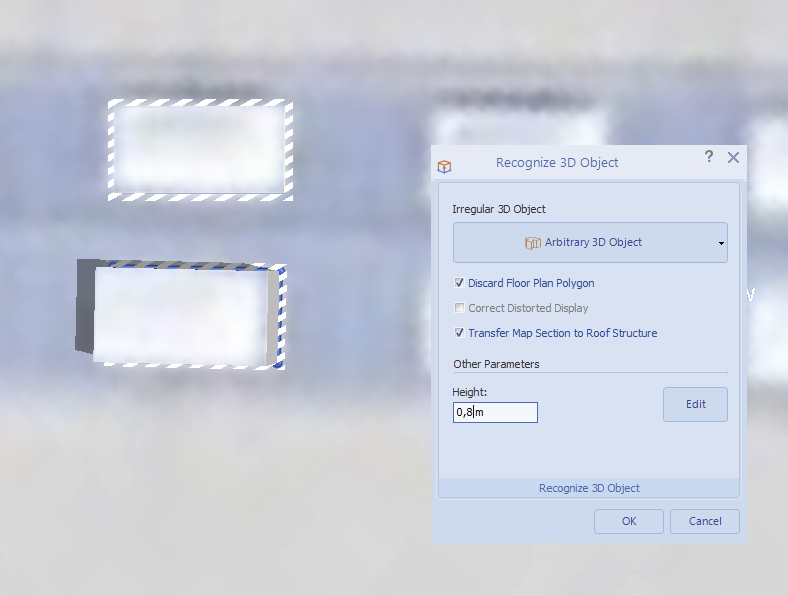
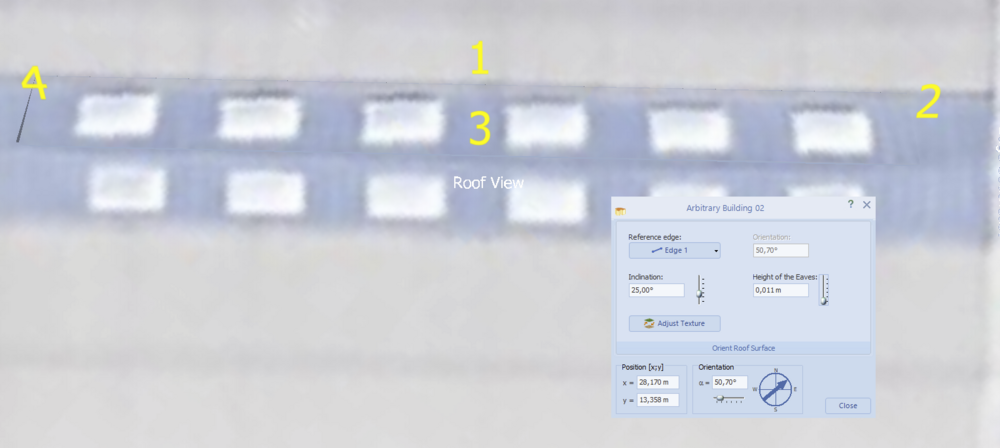
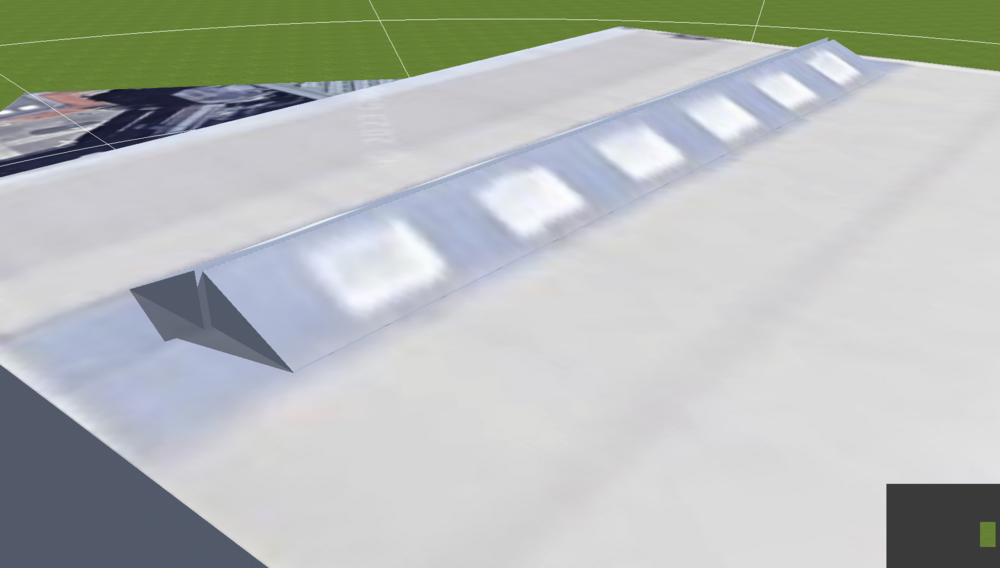
Dear Orakel952, if the light domes do not have to be round, you can just use the extrusion tool: In your case you would extrude the whole ridge at once, in two segments, I guess. Then you can also add an inclination like so: I made two extrusion (but didn't move them close together so that we see more detail): Hope that helps, kind regards, Martin
-
Hi Aleksandar, that is correct. You can find this diagram in the Diagram Editor when you select "Carpet Plot" instead of time series. The values you see there are the monthly averages. Kind regards, Martin
-
Hi Stepkuk, thank you for your feedback. The removal of the right-click option was not intended, I am afraid. We will try to bring it back in the next release. The reason we had to swap out the former text boxes was that they didn't work well in high DPI scenarios. We are sorry if the exchange of the components also had some unwanted effects. I am sure we can fix that. Kind regards, Martin
-
Hallo Hannes, vielen Dank für das Projekt. Meine Vermutung war richtig, der Netzbezug kommt durch den oben beschriebenen Effekt zustande. Was die Deckung der Wandlungsverluste aus der Batterie angeht: Das werde ich mal prüfen bzw auch mit den Kollegen diskutieren, danke für den Hinweis. Beste Grüße, Martin